NCC Level 4 Diploma in Computing
NCC Level 4 Diploma in Computing
Course Fee: £4500
The Level 4 Diploma in Computing (L4DC) provides learners with a solid foundation in both computing and business principles, preparing them for professional roles or further study in the IT field. The qualification combines academic knowledge and practical application, enabling students to develop essential thinking, analytical, and problem-solving skills required in modern computing environments.
About This Course
The Level 4 Diploma in Computing (L4DC) provides learners with a solid foundation in both computing and business principles, preparing them for professional roles or further study in the IT field. The qualification combines academic knowledge and practical application, enabling students to develop essential thinking, analytical, and problem-solving skills required in modern computing environments.
Learners will explore key subjects such as programming, database design, networking, information systems, and software development, while gaining insight into how technology supports and drives business operations. The course also focuses on developing communication, teamwork, and project management skills essential for success in the workplace.
Am I eligible for this programme?
Students must hold one of the following:
- NCC Education Level 3 International Foundation Diploma for Higher Education Studies (L3IFDHES), or
- NCC Education Level 3 Diploma in Computing (L3DC), or
- An equivalent local or international qualification approved by NCC Education.
Mature students with over two years of relevant work experience and O Level/GCSE/iGCSE English and Maths (or equivalent) may also be considered.
Course Fees
The fee for enrolling onto this course is £4500.
Students can make payment using one of the following methods:
- Credit or Debit Card
- Bank Transfer
- Interest Free Monthly installments
- Western Union
What is included in the cost of my course?
- All course material, including online modules and written assignments.
- Personal tutor support with 1-2-1 Zoom sessions where required.
- Dedicated student support
- Access to an online social learning forum
- Assignment marking and feedback.
Module listing
Algorithms and Mathematical Concepts for Computing
This module develops understanding of algorithms, logic, and mathematical principles fundamental to computing. Learners explore problem-solving, data structures, and algorithm design while applying mathematical reasoning such as algebra, logic, and set theory. The module strengthens analytical and computational thinking skills essential for programming, software development, and system optimisation within complex computing environments.
Computer Networks
The Computer Networks module introduces learners to the principles of network design, configuration, and management. It covers network models, protocols, and security fundamentals, enabling students to understand how data is transmitted and secured across systems. Learners gain practical experience in setting up and troubleshooting networks, preparing them for roles in network administration and IT infrastructure management.
Computer Systems
This module explores the architecture and components of computer systems, including hardware, operating systems, and system software. Learners examine how data is processed, stored, and managed, gaining insight into system performance and optimisation. The module provides practical experience in configuring and maintaining computer systems, supporting progression into technical support and system engineering roles.
Databases
The Databases module introduces the concepts of data modelling, design, and management using relational database systems. Learners develop skills in SQL, data normalisation, and database implementation, understanding how to organise and retrieve data efficiently. The module equips students with practical database administration knowledge crucial for software development, data analysis, and business information systems.
Front End Web Development
This module teaches the fundamentals of web design and development, focusing on creating responsive, user-friendly interfaces using HTML, CSS, and JavaScript. Learners gain practical experience in designing functional websites and applying usability principles. The module prepares students for entry-level roles in web development and supports further study in interactive and digital media design.
Object-Oriented System Analysis and Design
The Object-Oriented System Analysis and Design module introduces structured approaches to analysing and designing software systems. Learners apply object-oriented principles, use UML diagrams, and model system requirements to create effective software solutions. This module builds analytical and design skills essential for developing reliable, maintainable, and scalable software applications.
Software Engineering
This module provides a comprehensive overview of software engineering principles and practices, covering the software development lifecycle, project management, and quality assurance. Learners explore methodologies such as Agile and Waterfall, focusing on planning, testing, and documentation. The module equips students with practical skills to manage and deliver professional software projects effectively.
Designing and Developing Object-Oriented Computer Programmes
The Designing and Developing Object-Oriented Computer Programmes module focuses on applying object-oriented programming (OOP) concepts such as inheritance, encapsulation, and polymorphism. Using languages like Java or Python, learners design, code, and test software solutions. The module enhances problem-solving and programming proficiency, preparing students for careers in software development and application design.
Assignment listing
The Level 4 Diploma in Computing has 8 written assignments. The assignments are approximately 2,000-3,000 words each. Students are provided support on the modules and assignments via the ‘Tutor’ section of the learning platform.
More information about the level 3 units can be found here: www.qualifi.net
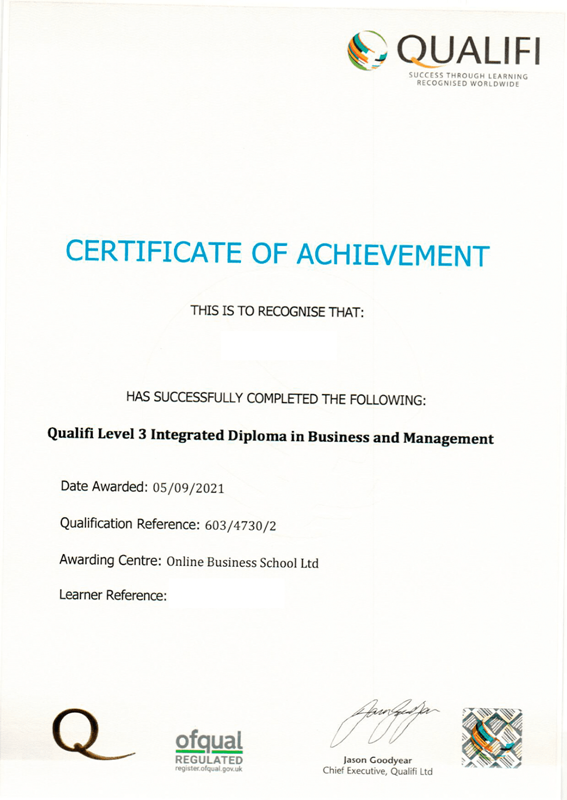
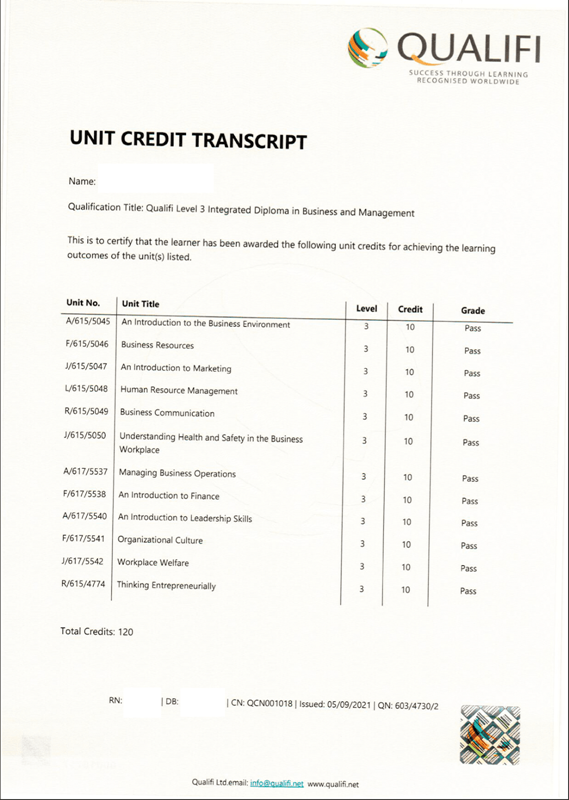
Sample Certificate
University Progression
Upon completing the Level 4 Diploma in Computing (L4DC), students can progress to the NCC Education Level 5 Diploma in Computing, equivalent to the second year of a UK bachelor’s degree or gain entry to Year 2 of many UK university programmes. The qualification also opens pathways to professional careers in the IT industry.